

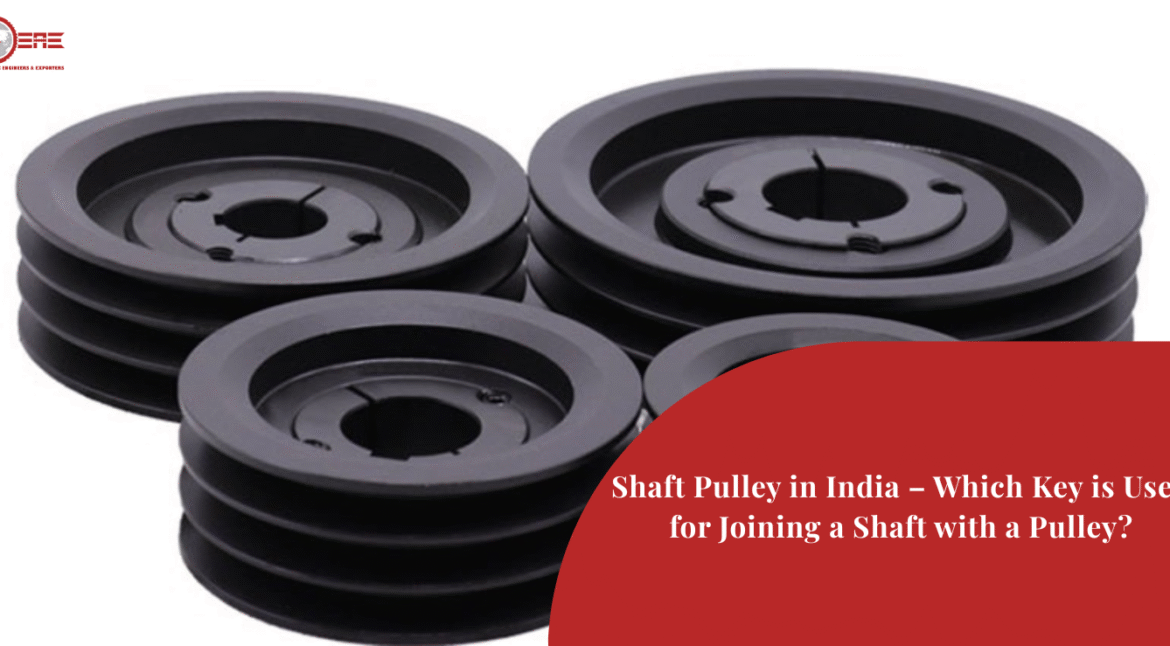
Which Key is Used for Joining a Shaft with a Pulley?
DEAE offers high-quality shaft pulley in India designed for secure and efficient power transmission. Choose DEAE for precision-engineered shaft pulley solutions trusted across industries in India.
The attachment of rotating parts, such as pulleys, gears, and sprockets, to a rotating shaft is a crucial component of mechanical power transmission systems. One way of connecting it is by using shaft keys. These tiny but important pieces hold the rotating piece in lock with the shaft, preventing slippage, and help with effective transmission of torque. In this blog, we discuss what kind of key is used to join a shaft to a pulley, the various types of these keys that are available and how they work.
Understanding Shaft Keys
These are metal pieces placed between a rotating shaft and the centre of a linked component, such as a pulley. They are essential in centring and fixing these components to rotate together without relative movement. This eliminates wear and increases torque transfer and mechanical efficiency.
When selecting a shaft key, consider the type of machinery, load torque, and the diameter of the shaft. Poor selection can result in mechanical breakdown, extended downtime and expensive repairs.
Types of Shaft Keys
It comes in many varieties, and each has a specific application based on its mechanical configuration.
Some of the common types are:
Rectangular (Parallel) Key:
Most commonly used for joining a shaft with a pulley and gears. It can be easily produced and fitted.
Square Key:
It is applied in those areas where the width and height of the key are the same. It fits in square keyways.
Tapered Key:
Tapers the length, fits tightly and minimises the possibility of movement under torque.
Woodruff Key:
A key in the shape of a half-moon that fits into a circular recess in the shaft. Used in the automotive and small machinery industries.
Gib Head Key:
This is a derivative of the tapered key, which has a head to enable its removal easily. Applied in areas where disassembling is necessary regularly.
Saddle Key:
A non-invasive key which is placed over the surface of the shaft without a keyway. Applicable in light loads.
Feather Key:
Enables the hub to move axially on the shaft and is useful where there are sliding parts.
Applications and Benefits:
The use of high-quality shaft pulleys in India is increasing steadily along with rapid industrialisation and growth in manufacturing industries. This growth also enhances the importance of choosing the correct type of key for reliability and minimum downtime.
By using the right key, you ensure:
- Fewer wear and tear
- High-performance torque transmission
- Slippage resistance
- Easy maintenance and assembling/disassembling
These parts are the most important components of a mechanical system with rotating components. They are important in both automobiles and industrial equipment.
Choosing the Right Shaft Key
The choice of the right key depends upon several factors:
- Type of load (uniform, shock, or reversing)
- Shaft pulley material
- The size and dimensions of the shaft
- Installation requirements and maintenance requirements
Practitioners handling shafts with a pulley system have to take the following variables into consideration before selecting a key. Imbalance, vibration, or system failure may be caused by a wrong selection.
Application of Tapered Shaft Pulley
To give you an example, the use of a tapered shaft pulley is more accurate and grippy in heavy-duty and high-speed applications. The tapered keys are good with tapered pulleys to ensure a good mechanical fit. They are most appropriate in conveyor systems, power plants and agricultural machinery, where performance and stability are paramount.
These designs help to give improved alignment and reduce backlash, and are more suitable in systems with dynamic loads. The tapered key-pulley combination must always be chosen on the advice of an expert to make sure it is compatible and safe.
Conclusion
Shaft keys form an important component of power transmission systems and are employed in the secure connection of turning parts like pulleys to the shafts. Regardless of the type of machine you are dealing with, whether a simple or complex mechanical system, knowledge of the types and applications of keys will be of help in ensuring long-term mechanical performance and reliability.
Purchase the right parts, seek advice from professionals in the field, and focus on proper installation to have your systems run safely and efficiently.