
How to Choose the Right Metal Bellows Coupling for High-Precision Industrial Applications

Introduction

Metal bellows couplings are crucial in modern industrial systems that require precision, accuracy and reliability. These highly specialised mechanical parts join two rotating shafts and tolerate minor misalignment without loss of torque transfer. In this metal bellows coupling selection guide, we discuss selecting the right coupling for high-precision industrial use.

What Is a Metal Bellows Coupling?

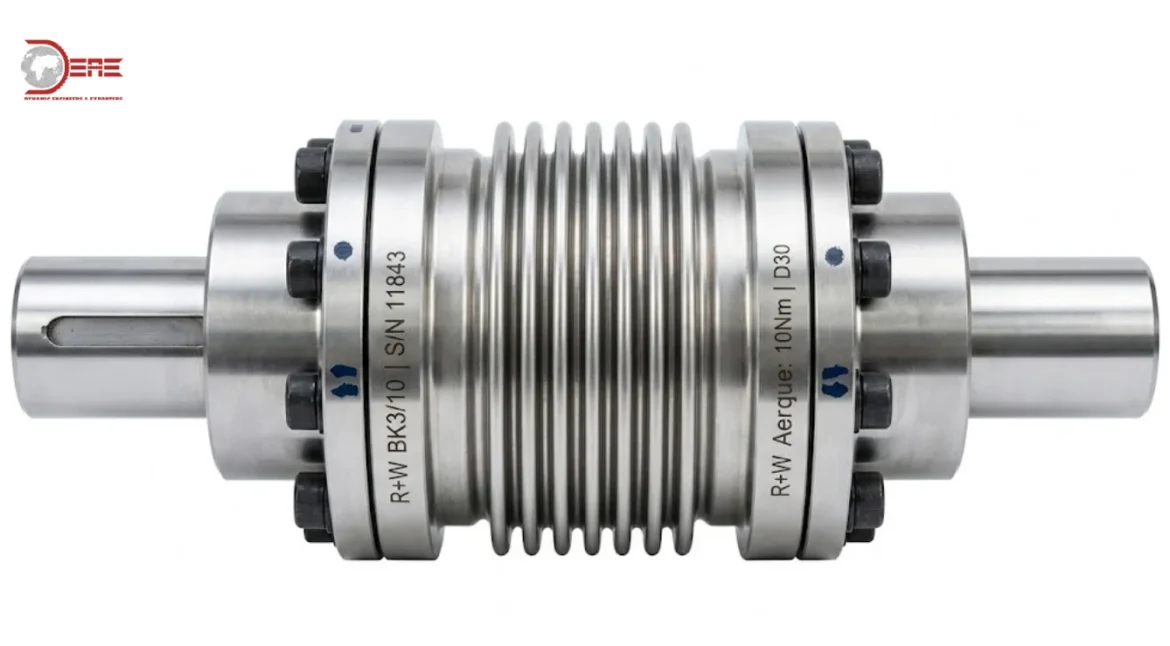
A metal bellows coupling is a flexible shaft coupling designed to transfer torque between two rotating shafts while also adjusting minor misalignments. It is composed of thin, flexible metal bellows, usually stainless steel, and attached to either end of the hubs.

These couplings are very flexible and deliver high torsional stiffness, which is why they are so popular.

Key Factors in Choosing a Bellows Coupling

The best bellows coupling for precise machinery depends on the nature of the operation and the mechanical needs of the machinery.

Here are some of the factors to consider:

  1. Torque capacity: The coupling should deliver the needed torque satisfactorily without failing or deforming.
  2. Shaft misalignment tolerance: Consider angular, axial and parallel misalignment of shafts.
  3. Rotational speed: High-speed machines require couplings that keep them balanced and stable at high RPM.
  4. Environmental condition: Temperature, moisture and chemical exposure may influence the performance of the coupling.
  5. Material compatibility: Stainless steel bellows are usually preferred for their high strength, corrosion resistance, and fatigue life.

Bellows Coupling Sizes: How to Select the Right One

The key to optimal system performance is selecting the right coupling size.In determining the size requirements, the following sizing tips need to be considered:
  1. Check shaft diameters: Make sure the coupling bore matches the shaft.
  2. Review torque ratings: The coupling must withstand peak torque conditions.
  3. Consider permissible misalignment: Higher couplings permit higher misalignment.
  4. Take system inertia into account: Lightweight couplings are more desirable for high-speed applications.
  5. Test the manufacturer’s specifications: Check the technical documentation to ensure compatibility.

Installation & Alignment Best Practices

Even the best coupling may fail if it is not properly installed. A correctly installed installation guarantees optimum functionality, longevity and operational well-being.
Some crucial bellows coupling sizing and installation tips are the following:
  • Before installing, make sure that the two shafts are clean.
  • Angular and parallel misalignment can be minimised by carefully aligning the shafts.
  • Install fasteners per the manufacturer’s torque requirements.
  • Test-run to ensure it rotates smoothly and is properly aligned.

Applications That Benefit Most from Bellows Couplings

The most common industries depending on these components are:

  • CNC machining centres for accurate control of tool positioning.
  • Precision motion control is used in robotics and automation.
  • Medical equipment which needs continuous motion control.
  • Ultra-precise mechanical operations are used in semiconductor manufacturing.

Metal Bellows vs Other Flexible Couplings

Flexible couplings are available in several types, such as jaw couplings and beam-and-disc couplings. Nonetheless, metal bellows couplings offer unique advantages that make them the best choice for precision machinery.

The following are some of the major differences:

  • Increased torsional stiffness ensures accurate transfer of motion.
  • No backlash, vital to the positioning system.
  • Reducing system instability and enhancing vibration control.
  • Longer fatigue life, owing to the flexible bellows design.

Maintenance Tips for Longer Coupling Life

Despite Metal bellows couplings requiring minimum maintenance, it is important to maintain them regularly to ensure stable operation.

The following are some of the basic maintenance practices:


  • Check the bellows regularly for any cracks or deformities.
  • Inspect shaft positioning to avoid excessive stress.
  • Make sure that the fasteners are tight and secure.
  • Monitor for unusual vibration or noise during operation.
  • Replace fatigued or worn-out couplings.
FAQs on Metal Bellows Couplings


1.What is a metal bellows coupling used for?

A metal bellows coupling is used to connect two rotating shafts while transmitting torque with high precision.

2.How do I choose the right bellows coupling size?

The correct size can be determined by comparing shaft diameters, required torque, allowable misalignment, and rotational speed.

3.What are the advantages of metal bellows couplings over other flexible couplings?

Among the key advantages of high-performance bellows coupling are zero backlash, high torsional rigidity, excellent vibration control, and long fatigue life.

Product Enquiry

×