

 Used in I.C engines
Description
Bowex FLE-PA Series Coupling in India
Flange couplings are designed to connect two shafts via cast-iron flanges engineered to transmit high torque in heavy industrial applications. Their high torsional stiffness and ease of installation make them a popular choice for power transmission in machinery, pumps, marine propulsion, and agitator shafts. Among others, Bowex Gear Coupling India is known for resonance-free operations and high torsion spring stiffness. This blog focuses on features of Bowex FLE-PA Series couplings, their applications and why trusting a reliable Bowex Flange Coupling Distributor is crucial to smooth out your industrial operations.
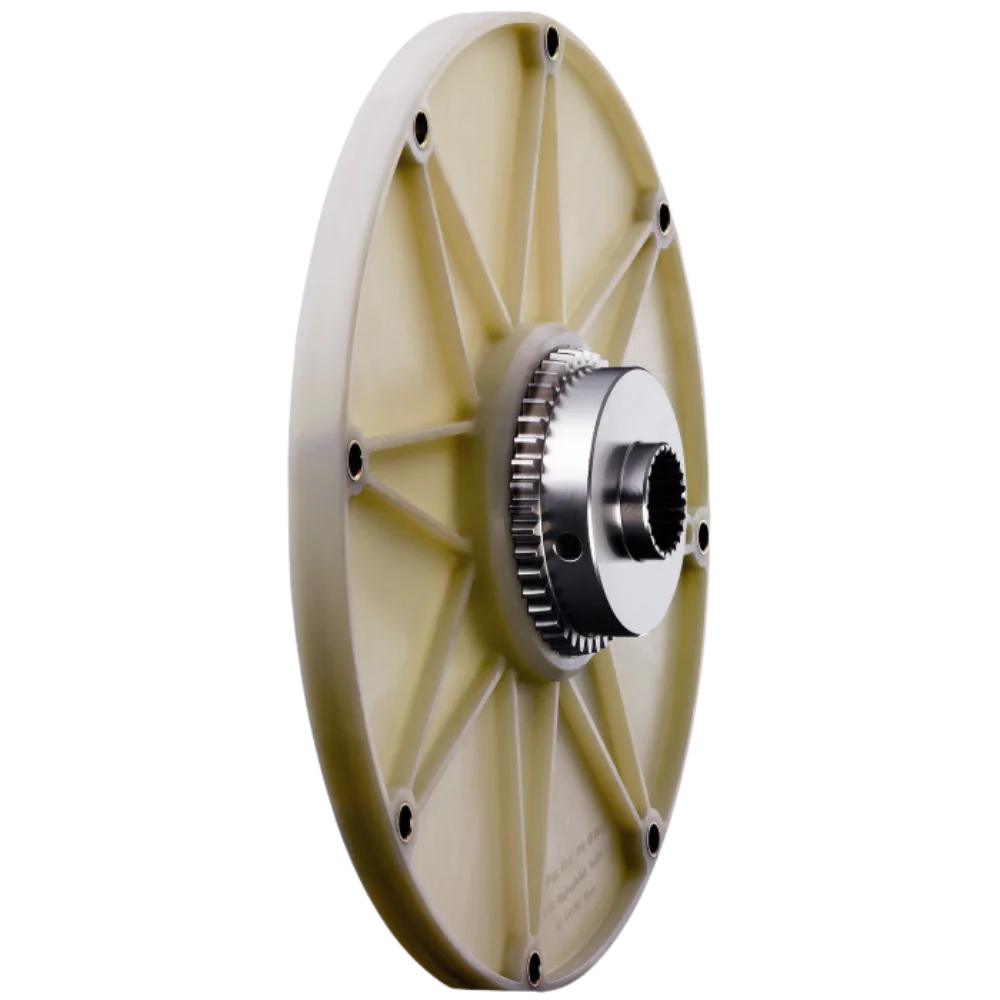
Bowex Gear Coupling India are compact but torsionally stiff flange couplings that are maintenance-free and easy to install. They are highly durable and are constructed with a combination of steel and polyamide. They come with torsionally stiff, curved-tooth flange couplings that offer superior wear tolerance and support engine power up to 800 kW.
Features & Benefits
 Bowex gear couplings are made from steel hubs and fibre-glass reinforced polyamide.
- Their curved teeth allow radial and angular misalignment, thereby minimising edge pressure.
- These couplings are torsionally rigid and highly durable.
- The couplings offer torque up to 6600 NM and a maximum bore of 125 mm.
- They are extremely short, torsionally rigid flange couplings.
Technical Specifications
At DEAE, our Industrial Flange Couplings Manufacturing team promises Bowex gear couplings that feature:
- Thermal stability- up to +100 degree celsius
- Torque capacity- up to 4250 NM
- Size – 6 to 14 inches
- Axial displacement- Max 1 to 2 mm
- Special connection flanges available
- Easy installation due to axial merging
- Shaft diameter of up to 125 Nm
Applications of Bowex FLE-PA Coupling
Bowex FLE-PA Coupling finds applications in:
- Construction and agricultural machinery
- Piston and screw compressors
- Suction pumps and conveyor system
- Internal combustion engines and hydraulic pumps
What are the advantages of Bowex FLE-PA coupling compared to other flange couplings?
- The coupling is wear-resistant and offers maintenance-free operations.
- Their short installation length makes them seamlessly fit into space constraints.
- They don’t need any special alignment tools, thereby reducing installation time and costs.
- Their curved design accommodates angular, radial, and axial misalignments.
- The couplings offer high mechanical strength and thermal stability.
- They are available in a wide variety of dimensions with specialised connection flanges.
Common causes of failure in BoWex couplings and how to prevent them
- Incorrect axial positioning of the coupling hub and flange can lead to uneven load distribution and axial thrust.
- Excessive misalignment can cause tooth breakage and shortened coupling life.
- Lack of exact screw sets can result in insufficient tightening.
- Absence of heat shields can cause thermal overload.
- Using duplicate parts can result in imprecise tooth geometry.
Why Choose DEAE Manufacturers
Specialising in Bowex Gear Coupling India DEAE offers Bowex couplings for various industrial applications. We are an authorised supplier for coupling products, including gear, tyre, and shaft couplings. Our engineering team brings in genuine products, ensuring high-quality, durable materials that are critical for power transmission. We also offer expert guidance to select the correct coupling size for specific application needs. Our Bowex FLE-PA coupling price in India is competitive and is made to cater to every heavy-duty industry.
FAQs
1. What is the use of Bowex FLE-PA coupling in industrial applications?
Bowex FLE-PA couplings connect two rotating shafts, providing secure, efficient power transmission. They allow for the compensation of minor misalignments and the reduction of vibration within machinery. These couplings offer improved durability, efficient misalignment tolerance, and corrosion resistance.
2. How do I select the right Bowex FLE-PA coupling size?
To select the right Bowex coupling size, check for the flywheel connection size to the flange. One must also check the maximum bore size and ensure that the maximum torque capacity matches that of the engine.