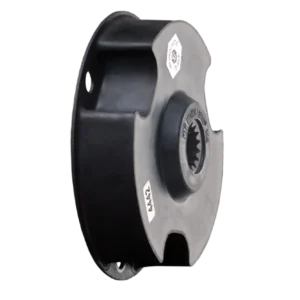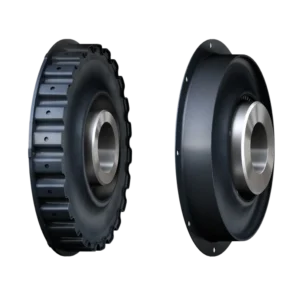

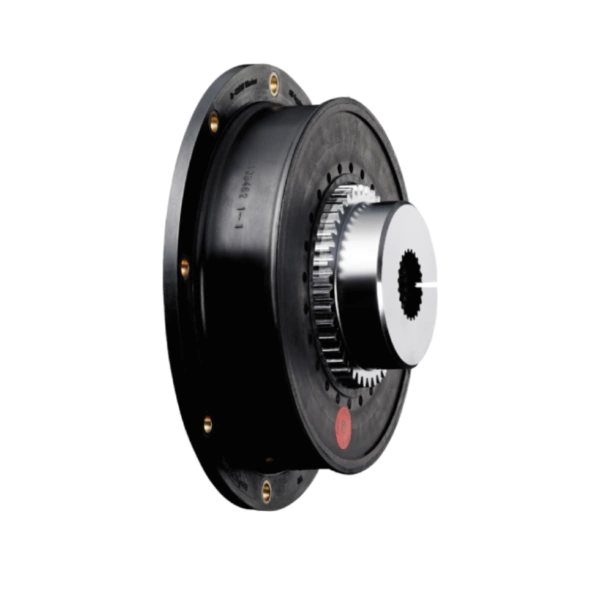
Flange Coupling

Introduction: Flange Coupling Manufacturer in India | Industrial Flange Couplings

Industrial power transmission systems used in industries mainly depend on reliable mechanical parts to guarantee uninterrupted operations. Flange coupling systems are one of these elements which are crucial in connecting rotating shafts and transmitting torque efficiently across different industries.
This blog discusses industrial flange couplings in detail, including what they are, how they operate, the main features, and how to select the best solution.
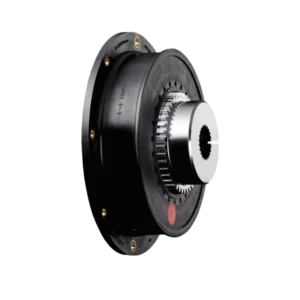
What is a Flange Coupling?

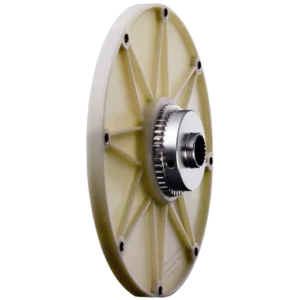
A flange coupling is a mechanical component used to join two rotating shafts together to transmit torque. It is made up of two flanged hubs attached to the respective shaft ends and firmly clamped by bolts. Such a connection is specially used in applications that require a high level of torque transmission and low shaft misalignment.

Industrial flange couplings are popular because they are rigid, are easy to assemble and can withstand heavy loads. It is usually used in pumps, compressors, gearboxes, conveyors and hard-working industrial machines.

Key Features & Benefits of Flange Couplings

Flange couplings are favoured in all sectors due to their strong performance and extended life.

Among their notable advantages include:

Types of Flange Couplings

Several flange coupling types are available, and each type has been made to address particular requirements of every industry.

The most popular ones include the following:

Elecon fluid couplings are known for their robust construction and high efficiency. These couplings are designed for challenging applications and provide excellent thermal stability and torque control. They are common in conveyors, crushers, ball mills, fluid couplings for agricultural machinery, and other heavy machinery that require smooth power flow.

Flange Coupling Applications

Flange coupling solutions have been extensively used in multiple industries because of their strength and functionality.

It is commonly used in:

How Does Flange Coupling Work?

A flange coupling is associated with bolting two flanges mounted on the shafts together with high-strength bolts. When one shaft rotates, the same is transferred to the other shaft connected via bolted flanges. This direct mechanical connection guarantees effective transmission of torque with minimal power loss.

Depending on the design of the coupling, some variants allow limited misalignment compensation and vibration damping, helping to protect machine parts and increase operational life.

Material & Construction Options

High-torque flange coupling is made of high-quality materials to sustain rough industrial usage.

The typical choices for material used are:

As a leading flange coupling manufacturer in India, we offer customised material and product designs to fit the requirements of certain industries.

Selection Guide: Choose the Right Flange Coupling

Choosing the flange coupling is an important decision and makes sure that it is efficient and safe.

Selection factors to consider include:

Consulting seasoned manufacturers or technical specialists helps make sure the chosen coupling performs at its best and lasts a long time.

Installation & Maintenance Tips

Installation and maintenance are important for the efficient proper functioning of the flange couplings.

Among the major recommendations are:

Why Choose DEAE Flange Couplings?

As a top manufacturer, DEAE aims to focus on precision engineering, quality materials, and strict standards of testing to offer reliable solutions for industrial uses.

As a trusted provider of flange coupling in India, we offer individualised solutions, professional technical assistance, and products that meet international quality criteria.

Frequently Asked Questions

A rigid coupling is used to connect aligned shafts.

No, it is designed for rigid connections.

In heavy machinery and pipeline systems.

Yes, it is suitable for high-torque applications.

Can't Find Answer? Ask Us

    Product Enquiry

    ×