
Why Choosing the Right Coupling Matters
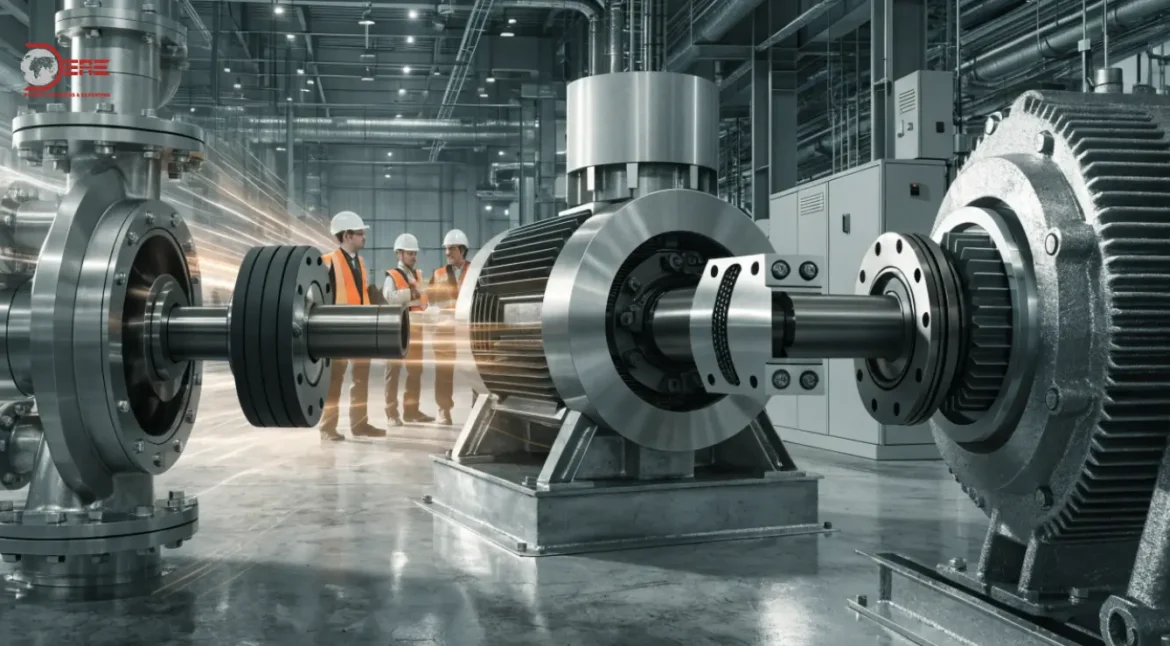
Every rotating machine uses a coupling to transfer power between shafts, which operates under demanding conditions while also withstanding shaft misalignment, vibrations and sudden, but rare, shock loads.
The use of the wrong coupling can lead to underperformance and increase the wear or failure of bearings, seals, and shafts.
Key Factors to Consider Before Choosing a Coupling
There are key factors to evaluate before choosing among the different types of coupling.
Here are some criteria that you should consider when making your choice:
- The coupling should be able to handle the peak and continuous torque of the application without exceeding its rated capacity.
- Angular, parallel and axial misalignment must be considered, as different types of couplings accommodate different misalignments.
- Precision balancing is required for high-speed applications to prevent vibration.
Best Couplings for Pumps
Pumps are the most widely used rotating machines in industries. The industrial coupling for pumps should be flexible, robust and easy to maintain.
Some of the most suitable options for pumps are:
- The tyre coupling is particularly suitable for pumps due to its high flexibility and vibration damping. The rubber tyre element absorbs torsional loads and angular and parallel misalignment simultaneously and is suited for use in centrifugal pumps that require smooth power transmission.
- Jaw coupling is a general-purpose coupling that is commonly used in pump systems.
- Grid coupling is used in pumps where shock absorption is a major concern, such as reciprocating or positive-displacement pumps.
Best Couplings for Motors
Choosing the best coupling for motors mainly depends on the application’s torque and precision requirements:
- The jaw coupling is a low-cost, popular option for general-purpose motor applications.
- When a motor is required for high-torque operations, such as for operating heavy conveyors, mixers or mills, gear couplings should be used.
- The disc coupling provides torsional rigidity with zero backlash in precision motor-driven systems such as CNC machines, servo drives, or test rigs.
Best Couplings for Compressors
It is important to understand the compressor coupling types available before making the final decision:
- Gear couplings are the industry standard for heavy-duty compressor applications requiring high torque.
- Disc couplings are used in high-speed compressor applications, such as centrifugal types, where precision and balance are critical.
- Grid couplings are used in compressors that experience high shock loads during start-up or in cyclic operation.
Coupling Comparison at a Glance
Below is a concise comparison of the most commonly used couplings:
| Application | Best Coupling | Key Benefit |
|---|---|---|
| Pumps | Tyre | Flexibility and vibration damping |
| Motors | Jaw | Cost-effective and reliable |
| Compressors | Gear | High torque capacity |
Common Mistakes to Avoid
Knowing about these errors can help save time and money:
- Before specifying a coupling, it is important to measure and account for all three types of misalignments.
- Choosing the cheapest available coupling without considering application requirements leads to frequent replacements and unplanned downtime, which can be more costly in the long run.
- Neglecting the coupling's maintenance guidelines can cause increased wear and even equipment failure.
How to Select the Right Coupling: A Step-by-Step Approach
Following a structured selection process removes guesswork and guarantees that you select the right coupling for the task.
Here is a simple step-by-step process:
- Identify whether the coupling is for a pump, motor, compressor, or another rotating machine, as each has different requirements.
- Determine the nominal and peak torque values, using an appropriate service factor depending on the type of load.
- Match the coupling's rated capacity, misalignment tolerance, and shock handling to the application.