
Automation in industrial machinery is no longer just a distant ambition reserved for large corporations; it has become a reality in many of today’s industrial sectors, such as food processing, pharmaceuticals, automotive and heavy engineering, to name a few. There is an increasing need for precision mechanical components, such as couplings, to support automated factory floors.
In this blog, we discuss the impact of the automation revolution on coupling demand in 2026, why precision is more important than ever, and the features that forward-thinking manufacturers prefer when choosing the right industrial couplings for their automated systems.
The Rise of Automation in Industrial Machinery
Over the past few years, the push towards Industry 4.0 has sharply increased.
Here is what drives this change:
- Automation in industries has expanded beyond large-scale manufacturing to mid-sized and small-scale production facilities, significantly expanding the market for precision mechanical components.
- Components that deliver consistent, repeatable performance across different loads and speeds are required for continuous operations, making couplings critical to drivetrains.
- The volume and types of couplings available are also increasing as multiple sectors are becoming automated, with more suppliers pushing for specialised couplings.
Why Automation Requires High-Precision Couplings
Automated systems operate continuously, often at high speeds, with minimal human intervention. Any vibration, backlash, or mechanical play in the drivetrain can cause major operational errors, especially in position-controlled or precision-cutting applications.
Here is why a precision coupling is so important:
- Automation industrial coupling should be torsionally stiff, dynamically balanced, and capable of transmitting torque without delay or distortion to maintain system accuracy.
- Any error, even in a fraction of a millimetre, can affect the overall product quality, lead to sensor faults or cause premature wear on costly servo motors and gearboxes.
- Applications in which zero backlash is important for achieving absolute positional accuracy have surged in recent years, especially in robotics, semiconductor manufacturing, medical devices, and packaging lines.
- Zero-backlash coupling applications eliminate rotational play between connected shafts, ensuring that motion commands from servo drives are met with immediate, precise mechanical responses.
Shift Towards Low-Maintenance & High-Performance Solutions
One of the most prominent trends impacting the coupling market in 2026 is the strong buyer preference for low-maintenance, long-life solutions.
The following points highlight this shift:
- Manufacturers are moving away from couplings that require regular lubrication or replacement of worn parts periodically in favour of maintenance-free, sealed alternatives.
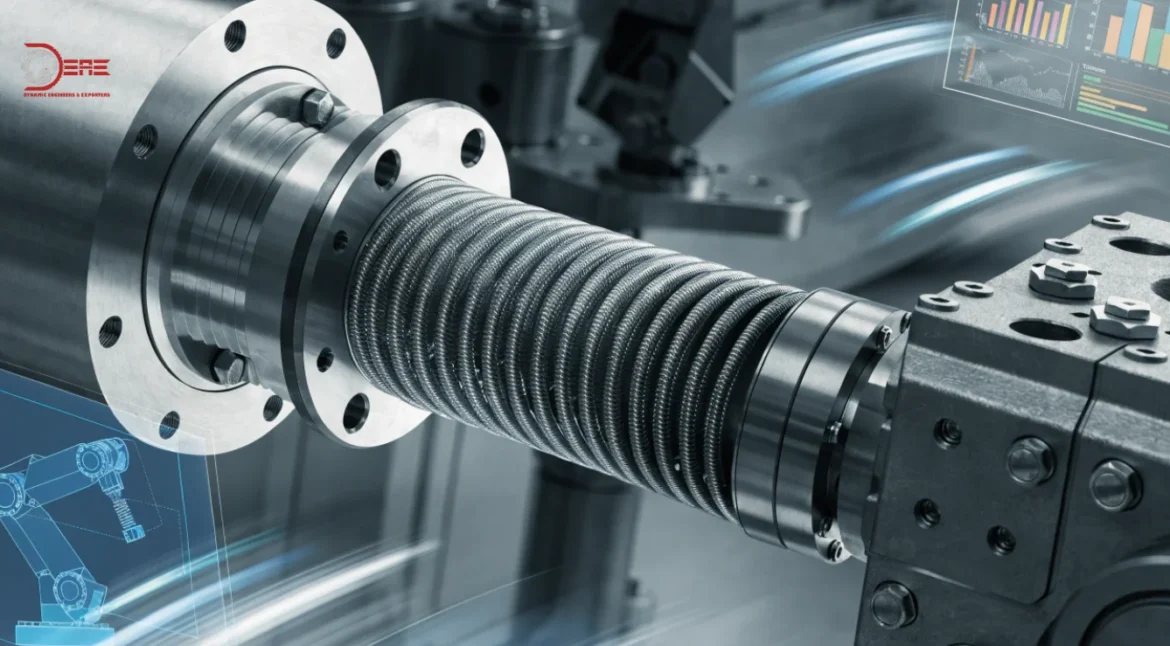
- The most popular couplings for automated machines today are disc couplings, bellows couplings and jaw couplings with polyurethane elements.
- Buyers are placing greater emphasis on the durability of materials and surface treatments for corrosion and fatigue resistance, which directly extend service life and reduce lifecycle costs.
Impact of High-Speed Machines on Coupling Demand
As machine speeds increase, engineering challenges associated with drivetrain components also become more complex.
Here are a few significant factors impacting the demand in this field:
- A coupling for high-speed machinery should be carefully balanced to prevent vibration-induced resonance that can damage bearings, sensors, precision tooling, etc. at high RPMs.
- High-speed applications require couplings with lower moments of inertia, such as in spindle drives in CNC machining centres, turbo-compressors or high-frequency servo systems for quicker acceleration and deceleration cycles.
- Coupling manufacturers are investing heavily in lightweight alloys and precision-machined hubs for high-speed machinery, which reduces the rotational mass of the machine while maintaining the same torque capacity.
How Buyer Expectations Are Changing in 2026
The most significant shift in the coupling industry has been in how purchase decisions are made. In 2026, buyers are much more strategic and technically informed in their approach.
These are reflected in the following trends:
- Procurement is not just about 'cheap' any longer; it's all about the total cost of ownership, ease of installation, maintenance requirements and energy efficiency.
- Industrial couplings for automation are increasingly being specified with smart integration in mind, because some of them now feature embedded sensors that transmit real-time data on torque, temperature, and wear to predictive maintenance platforms.
- The buyer enters the supplier discussion with clear performance requirements in mind, such as no-backlash coupling for servo-driven robots or balanced coupling for automated machines on high-throughput packaging lines.
Contact our team today to learn more about the best coupling for your specific automation needs.
Bellows couplings and disc couplings are widely preferred for automation systems due to their high precision, zero-backlash performance, and smooth torque transmission. They are ideal for servo motors, CNC machines, and robotic applications.
Zero-backlash couplings eliminate rotational play between shafts, ensuring accurate motion control and precise positioning in automated machinery. This helps improve machine efficiency, product quality, and overall operational reliability.